-
.NET (.NET Core)
-
1C
-
APL
-
AWK
-
Agda
-
Agile/Scrum
-
Alef
-
Assembler
-
Basic
-
Beta Programming Language
-
Big Data/DataScience
-
C
-
C#
-
C++
-
CSS
-
Cobol
-
Crystal
-
D
-
Dart
-
DataBase (SQL)
-
Delphi
-
F#
-
Flutter
-
Fortran
-
GPT/AI/ИИ
-
GameDev
-
Git
-
Go (Golang)
-
HTML
-
Hacking and Security
-
Haskell
-
Java
-
JavaScript (JS)
-
Julia
-
Kotlin
-
Machine Learning (ML)
-
Natural language processing (NLP)
-
PHP
-
Pascal
-
Python
-
R
-
Ruby
-
Rust
-
Scratch
-
Swift
-
UML
-
UX/UI
-
Visual Basic
-
Wolfram
-
XML
-
АСУ
-
Проектирование/System Design
-
Сети/Network
-
Схемотехника/электронные схемы
-
.NET (.NET Core)
-
1C
-
APL
-
AWK
-
Agda
-
Agile/Scrum
-
Alef
-
Assembler
-
Basic
-
Beta Programming Language
-
Big Data/DataScience
-
C
-
C#
-
C++
-
CSS
-
Cobol
-
Crystal
-
D
-
Dart
-
DataBase (SQL)
-
Delphi
-
F#
-
Flutter
-
Fortran
-
GPT/AI/ИИ
-
GameDev
-
Git
-
Go (Golang)
-
HTML
-
Hacking and Security
-
Haskell
-
Java
-
JavaScript (JS)
-
Julia
-
Kotlin
-
Machine Learning (ML)
-
Natural language processing (NLP)
-
PHP
-
Pascal
-
Python
-
R
-
Ruby
-
Rust
-
Scratch
-
Swift
-
UML
-
UX/UI
-
Visual Basic
-
Wolfram
-
XML
-
АСУ
-
Проектирование/System Design
-
Сети/Network
-
Схемотехника/электронные схемы
Меню
Mastering Large Language Models with Python: Unleash the Power of Advanced Natural Language Processing for Enterprise Innovation and Efficiency Using Large Language Models (LLMs) with Python
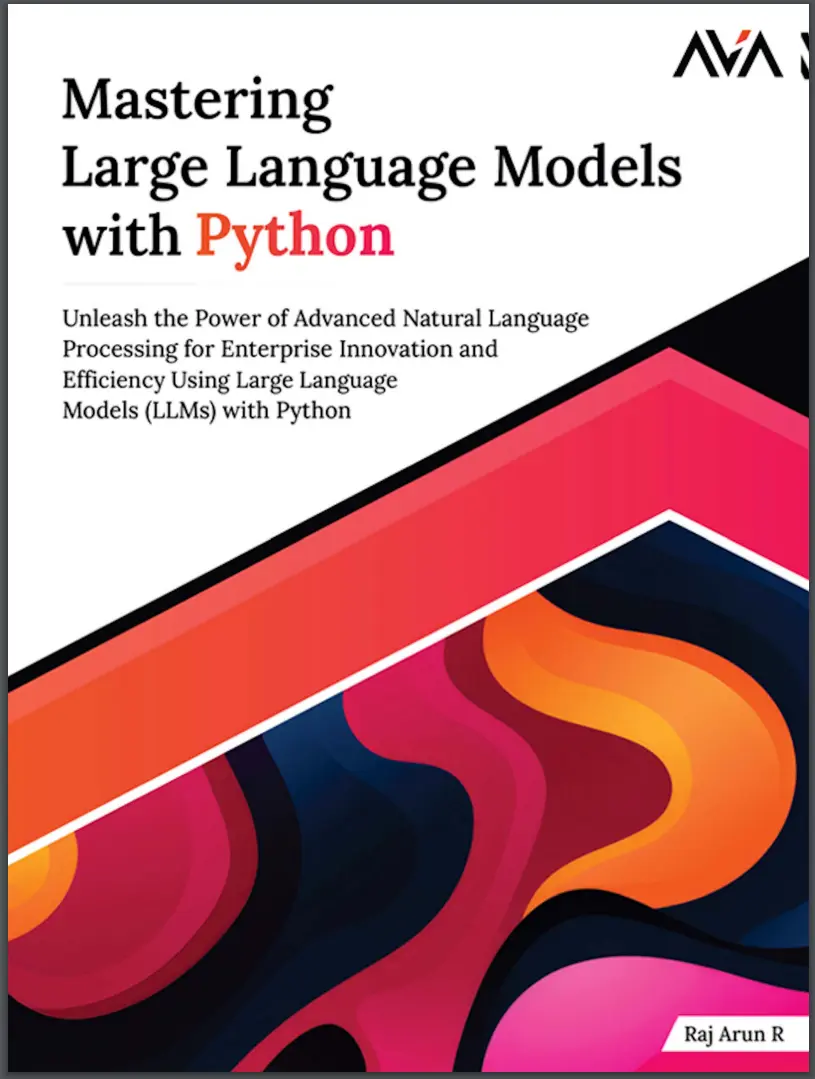
Автор: Raj Arun R
Дата выхода: 2024
Издательство: Orange Education Pvt Ltd, AVA™
Количество страниц: 554
Размер файла: 8,7 МБ
Тип файла: PDF
Добавил: codelibs
Dedicated To....4
About the Author....5
About the Technical Reviewers....6
Acknowledgements....8
Preface....9
Downloading the code bundles and colored images....11
Errata....11
Table of Contents....13
Unfolding the Journey of Language Models....38
Influence of Large Language Models....40
Understanding Transformers....41
Transformers in Large Language Models....42
Attention Mechanisms....44
Transformers and Large Language Models....49
KM Scaling Law....50
Chinchilla Scaling Law....51
Key Techniques for Large Language Models....51
Alignment Tuning and Tools Manipulation....52
Tools Manipulation....54
Publicly Available Model Checkpoints or APIs....55
Collecting Data....56
Configuring LLMs in Detail....59
Emergent Abilities of Large Language Models....60
Exploring the Inner Workings of LLMs....61
Confluence of ICL and CoT....62
CoT Prompt Design....63
Assessment Yardsticks for Large Language Models....64
In-depth Analysis of the Capabilities of LLMs....65
References....67
Open-Source versus Proprietary Large Language Models....69
Risks and Drawbacks of Open-Source LLMs....70
Security Vulnerabilities in Open-Source LLMs....71
StableLM: Empowering Language Generation with Stability AI....72
BERT: Advancing Language Representations with Bidirectional Encoder Representations from Transformers....74
BLOOM: Empowering Open Science with the Largest Multilingual Language Model....75
RedPajama: Advancing Open-Source Language Models....77
Falcon-40B: Empowering Open-Source Language Models....78
StarCoder: Empowering Developers with Code Generation....79
Replit-Code: Empowering Developers with Intelligent Code Completion....81
GPT-Neo: Empowering Open and Collaborative Research in Language Models....82
Galactica: Revolutionizing Scientific Knowledge with Meta AI....83
Segment Anything Model (SAM): Advancing Image Segmentation with Meta AI....85
Dolly: Empowering Natural Language Processing with Databricks....86
GPT-4 Limited Beta....94
GPT-3....94
GPT-3.5....95
DALL·E Beta....95
Whisper Beta....95
Embeddings....95
Moderation....95
Codex....96
Accessing GPT Models via OpenAI API....96
Function Calling with OpenAI....99
Completions API....100
Image Generation....103
Embedding Model Understanding Embeddings....107
Whisper: OpenAI’s Speech-to-Text Model....108
Moderation Model: Ensuring Content Compliance....109
Models....112
Exploring Cohere Playground....113
Selecting the Right Model Size....115
Security Concerns when Using API Inferencing with Sensitive Data....123
Natural Language Processing....125
Audio....130
Computer Vision....131
Code Overview — Hugging Face APIs in Action....133
Function Signature....133
Setting Up....133
Task Selection....134
Sending the Request....134
Example Usage....135
Installation....136
Authentication....136
Models....137
Chat....138
Completion....139
Edit....141
Images....142
Embeddings....147
Audio....148
Moderation....149
Installation....151
Authentication....151
Text Classification....170
Text Generation....170
Text Summarization....170
Required Knowledge and Tools....171
Setting up Google Sheets and Google Apps Script....171
Getting the Cohere API key....172
Explanation of the Boilerplate code....175
Walkthrough of the code and its structure....177
Text Classification....180
Text Generation....181
Text Summarization....182
Expected results and how to interpret them....185
Understanding the Use Case: Movie Recommendations....191
Background of Sentence Transformers /all-MiniLM-L12-v1....192
Vector Databases: An Overview and Importance....193
Environment Preparation in Google Colab....199
Data Preprocessing for Transformers....202
Choosing the Right Transformer Model:....203
Defining Movie Data Loading and Vector Encoding....204
Defining the Vector Database Indexing Process....205
Defining the Search Function....207
The Load and Index and Search Functions....208
Wrapper Functions....209
Summarizing the Use of Transformers and Vector Databases....212
Future Improvements and Scalability Considerations....213
Benefits of Vector Databases over Traditional Databases....221
Tech-Stack Walkthrough and Explanation....223
Pre-requisites....223
Implementation Steps....226
Detailed Code Walkthrough....227
Tech-Stack Walkthrough and Explanation....231
Understanding FAISS and Pinecone....231
Pre-requisites....233
Implementation Steps....233
Detailed Code Walkthrough....234
Benefits and Importance of LLMs....241
Types of Quantization Techniques....242
Specialized Quantization Strategies for LLMs....242
Quantization Using....250
Integration with Hugging Face Transformers....251
Quantization Using GPTQ....257
Foundation LLM....267
Pre-trained LLM....267
Fine-Tuned LLM....267
Faster Training and Deployment....268
Better Performance on Specific Domains....268
Requires Less Data for Fine-Tuning....268
Lower Risk....269
Access to State-of-the-Art Models....269
More Data, More Knowledge....269
Model Scale and Architecture Matter....269
Diminishing Returns....270
Balancing Corpus Size with Compute Resources....270
Corpus Relevance....270
Multi-domain Versatility....270
Understanding the Dataset....271
Choosing the Right Pre-trained Model....271
Targeted Parameter Fine-Tuning....271
Customizing the Training Objective....271
In-Context Learning and Other Advancements....272
Tips for Creating an Instruction Dataset....272
GPU Architecture: Core Components....274
Programming GPUs....275
GPUs in LLMs....275
Selecting the Right GPU for LLM Training....275
GPU for Model Inference....276
Key Factors to Consider....277
Task-Specific Recommendations....278
General Guidelines....278
Token Economics....280
Art of Prompt Optimization....280
GPT Versions Cost Ratio....280
Embedding and Fine-Tuning Costs....281
Training and Fine-Tuning Costs....281
GPU Memory Requirements....281
Areas for Innovation....281
Evaluation Metrics....282
Evaluating General NLP Tasks....285
Challenges....287
Implementation Walkthrough....294
Environment Preparation for DeepSpeed....323
Implementation Walkthrough....337
Data Preparation....349
Model Training....349
Model Evaluation....350
Model Deployment....350
Model Monitoring....350
Importance of Data Management....351
Data Collection and Preprocessing....351
Data Labeling and Annotation....352
Data Storage, Organization, and Versioning....352
Traditional Development Process....352
Platform LLMOps Approach....353
Computational Resources....354
Transfer Learning....355
Human Feedback....355
Hyperparameter Tuning....355
Performance Metrics....355
Prompt Engineering....356
Building LLM Chains or Pipelines....356
Exploratory Data Analysis (EDA)....356
Data Preparation and Prompt Engineering....357
Model Fine-Tuning....357
Model Review and Governance....358
Model Inference and Serving....358
General Best Practices....359
Efficiency....360
Scalability....360
Risk Reduction....360
Enhanced Customer Experience....361
Large Model Size....362
Complex Datasets....362
Continuous Monitoring and Evaluation....362
Scalability....362
Model Optimization....362
Infrastructure Optimization....363
Security and Privacy....363
Integration....363
Automation....363
Monitoring....363
Validation....363
Latency Considerations....364
Cost Management....364
Resource Management....364
Deployment Options: Cloud-based or On-premise....365
Deployment Strategies....366
Data Privacy and Protection....367
Data Encryption and Access Controls....368
Model Security....368
Regulatory Compliance....368
Prohibit Misuse....369
Thoughtfully Collaboration with Stakeholders....370
Output Validation....371
Prepare for DDoS Attacks....371
Building User Limits....371
Care About Latency....372
Avoid Retrofitting Logs and Monitoring Records for LLMs....372
Implement Data Privacy....372
Costs....373
Optimization....373
Trade-offs....373
Checklist for LLMOps Deployment....379
DataLoader....400
Summarizer....401
MLflowHandler....404
Wrapping Up — The Pipeline....413
Prompt Shape....422
Manual Template Engineering....422
Answer Shape....425
Answer Space Design Methods....425
Prompt Ensembling....426
Prompt Augmentation....427
Prompt Composition....427
Prompt Decomposition....427
Training Settings....428
Parameter Update Methods....428
Knowledge Probing....431
Classification-based Tasks....432
Information Extraction....432
“Reasoning” in NLP....433
Question Answering....433
Text Generation....433
Ensemble Learning....434
Few-Shot Learning....434
Larger-Context Learning....434
Query Reformulation....434
QA-based Task Formulation....435
Controlled Generation....435
Supervised Attention....435
Data Augmentation....435
Prompt Design....436
Answer Engineering....437
Selection of Tuning Strategy....438
Multiple Prompt Learning....438
Choosing Optimal Pre-trained Models....440
Analyzing Prompting Theoretically and Empirically....440
Exploring Prompts’ Transferability....440
Calibration of Prompting Methods....441
Combination of Different Paradigms....441
Three Pillars of Prompt Anatomy....445
Significance of Understanding Prompt Anatomy....447
Advanced Techniques....448
Controlling Inconsistencies: Temperature and Self-Consistency....449
Prompt Pattern Catalog....450
Meta Language Creation Pattern....454
Output Automater Pattern....456
Understanding Flipped Interaction Pattern....457
Persona Pattern....459
Question Refinement Pattern....460
Alternative Approaches Pattern....461
Cognitive Verifier Pattern....462
Fact Checklist Pattern....464
Template Pattern....465
Infinite Generation Pattern....466
Visualization Generator Pattern....467
Game Play Pattern....469
Reflection Pattern....470
Refusal Breaker Pattern....471
Context Manager Pattern....472
Recipe Pattern....474
Separate Instructions and Context....475
Be Specific and Detailed....476
Articulate Desired Output Format Through Examples....477
Zero-Shot, Few-Shot, and Fine-Tuning....478
Avoid Fluffy Descriptions....479
Being Explicit About What to Do....479
Code Generation Specifics....480
Text-based Conversational AI....484
Text-based Image Synthesis....485
The Power of Learning from Human Input (RLHF)....489
Guardrails — Protective Measures....489
Intrinsic Issues....490
Deliberate Attacks....491
Unintended Glitches....492
Evaluation Stage....493
Runtime Monitoring....494
Ethical Principles and AI Regulations....495
Red Teaming....495
Manipulating LLMs....495
Checking the Checkers: Verification of NLP Models....497
Interval Bound Propagation: Establishing the Fence....498
Navigating Uncertainty with Abstract Interpretation....498
Bracing for Change with Randomized Smoothing....498
Black-Box Verification: Cracking the Code....499
Assessing the Resilience of LLMs....499
A Case for Smaller Models....499
Runtime Monitors: The Guardians of LLMs....499
Detecting the Deviations: Monitoring Out-of-Distribution....500
Guarding Against Output Failures....500
Perspective....501
Regulate or Ban?....502
Responsible AI Principles....502
Transparency and Explainability....502
Introduction to Symbolic Systems and Their Capabilities....506
Introduction to Symbolic Systems and their Capabilities: A Deep Dive into Cyc....506
The Untapped Potential of Combining Both for Trustworthiness....507
Identifying Gaps and Proposing Extensions to the Desiderata....509
Examination of the Desiderata....509
The Role of Semantic Amplification in the Trust-Enhanced Generative Framework (TEGF)....518
Statistical Language Model (SLM)....518
Symbolic Reasoning Engine....519
Trustworthiness Layer....520
Explainability Module....521
Data Provenance Tracker....521
Contextual Understanding Module....522
Component Interactions and Trust Propagation....523
Recommendations for Enhanced Cohesion....524
The Mechanics of the Provenance Layer....527
Real-World Implications: A Multi-Sector Focus....527
Case Study: Healthcare Complex Diagnoses....528
User Experience....528
Security Aspects....528
Future Developments....528
Components of TIGAI....529
TIGAI: Complementary or Contrasting Aspects with TEGF....532
Case Studies....533
Technical Depth....534
Future Scope....534
User Experience....534
Security and Compliance....534
Performance Metrics....535
Data Privacy and Consent: The Double-Edged Sword....535
Transparency and Accountability: The Pillars of Ethical AI....536
Potential for Misuse: The Dark Side of Trustworthiness....536
Ethical Guidelines for TEGF in Healthcare....537
Future Outlook and Public Policy....537
“Mastering Large Language Models with Python” is an indispensable resource that offers a comprehensive exploration of Large Language Models (LLMs), providing the essential knowledge to leverage these transformative AI models effectively. From unraveling the intricacies of LLM architecture to practical applications like code generation and AI-driven recommendation systems, readers will gain valuable insights into implementing LLMs in diverse projects.Covering both open-source and proprietary LLMs, the book delves into foundational concepts and advanced techniques, empowering professionals to harness the full potential of these models. Detailed discussions on quantization techniques for efficient deployment, operational strategies with LLMOps, and ethical considerations ensure a well-rounded understanding of LLM implementation.Through real-world case studies, code snippets, and practical examples, readers will navigate the complexities of LLMs with confidence, paving the way for innovative solutions and organizational growth. Whether you seek to deepen your understanding, drive impactful applications, or lead AI-driven initiatives, this book equips you with the tools and insights needed to excel in the dynamic landscape of artificial intelligence.


